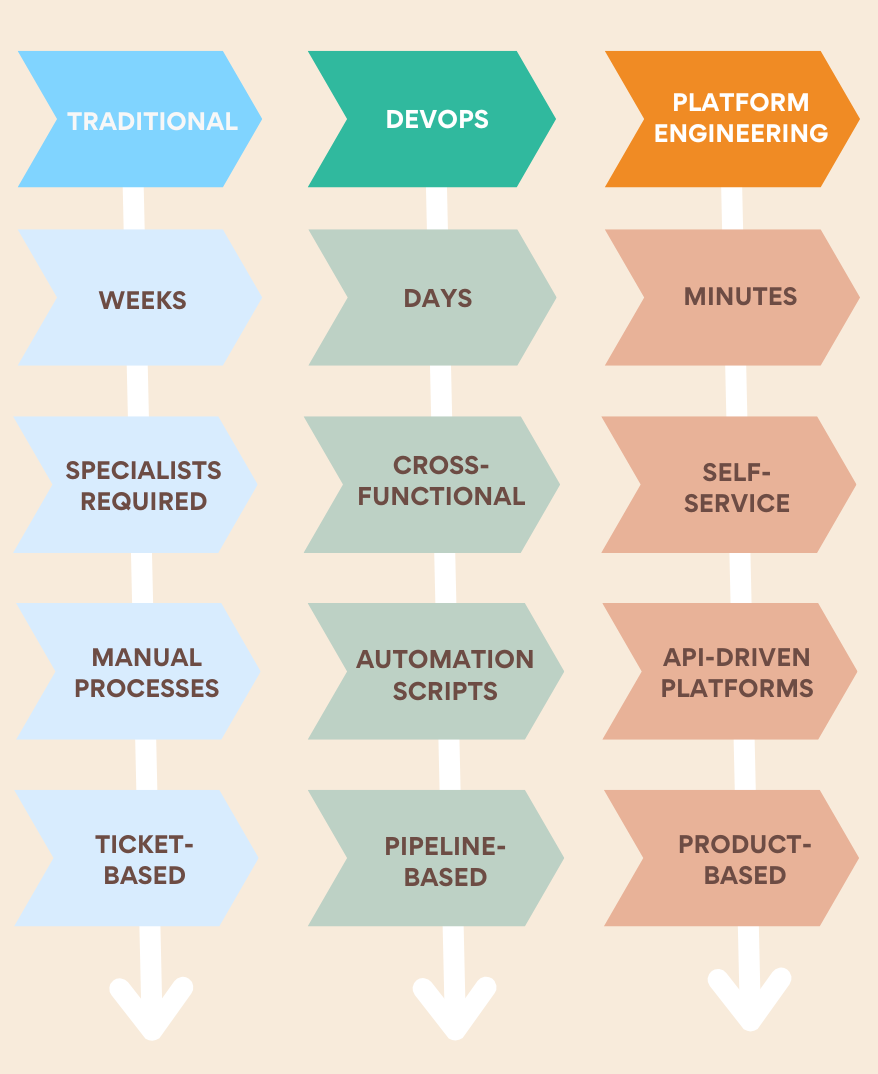
Platform Engineering Guide - 5 Key Use Cases of Internal Developer Platforms
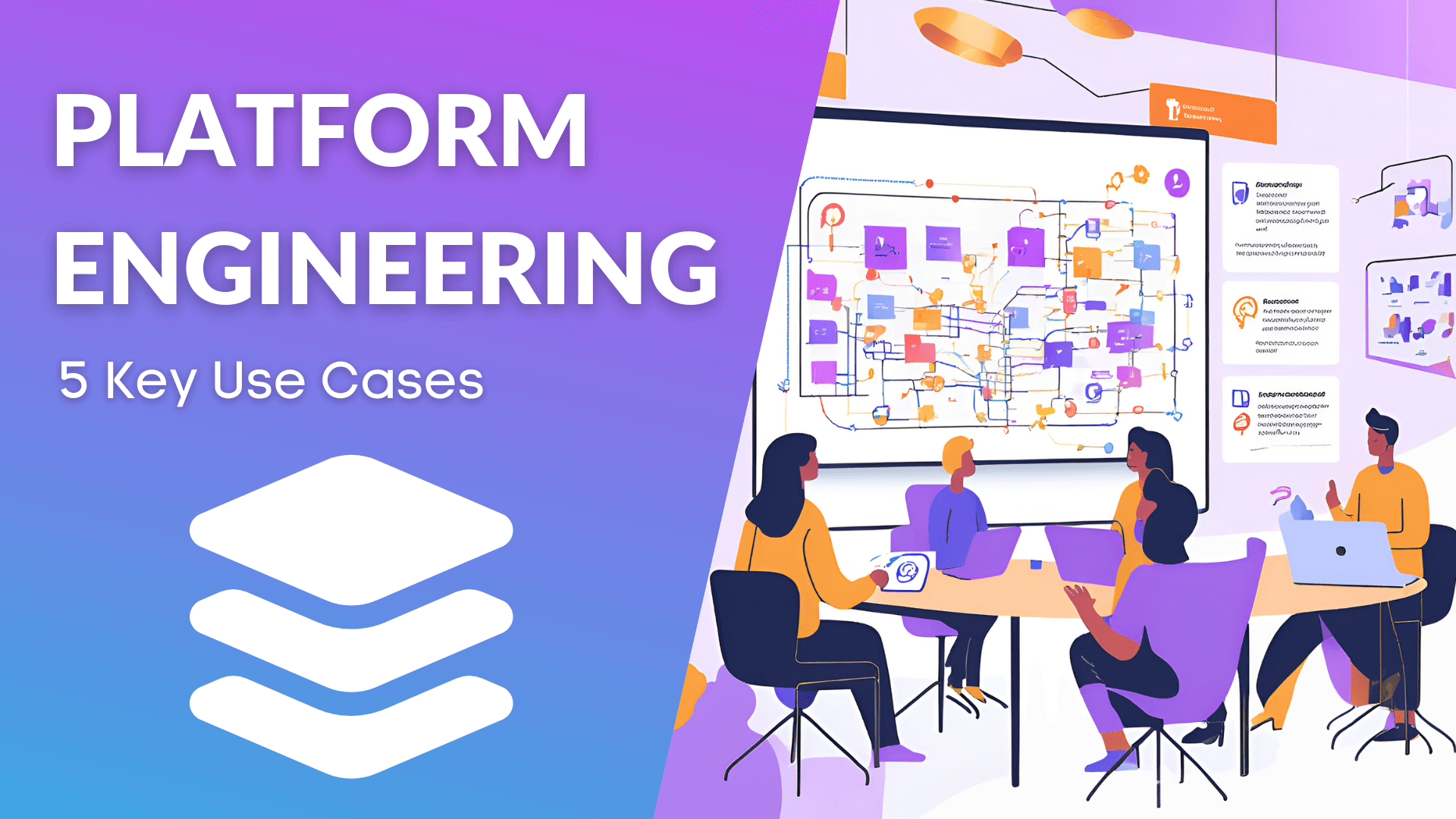
This guide dives into platform engineering and how it completely changes the software development process.
By building a centralized platform that automates tasks like environment provisioning, CI/CD pipelines, and infrastructure management, platform engineering empowers developers to focus on what matters most:
DELIVERING VALUE THROUGH CODE
Why Your Teams Need an Internal Developer Platform
CHALLENGE
WITHOUT IDP
WITH IDP
PRODUCTIVITY GAIN
Setting up new project
2-3 weeks, multiple teams
30 minutes, self-service
95% time reduction
Database provisioning
Ticket → wait → configure
5-minute self-service
99% time reduction
Deployment to production
Complex CI/CD setup
One-click deployment
80% complexity reduction
Compliance & security
Manual checks
Automated guardrails
90% risk reduction
Don’t know what Platform Engineering is?
Start here 👇
5 Key Use Cases That Simplify Your Developers’ Lives
1) Accelerated Project Bootstrap
🔴 Before IDP:
Multiple tickets, waiting for infrastructure team, manual configuration
🟢 With IDP:
Self-service portal with template selection, automated environment creation
🙋♂️ Real Impact:
“Our team launched a new microservice in hours instead of weeks” - DevTeam Lead
💡 Technical Detail:
A developer selects the “API Microservice” template from the IDP portal, which
-
automatically provisions a GitHub repository with pre-configured CI/CD workflows
-
creates a Kubernetes namespace with resource quotas
-
sets up monitoring with Prometheus and Grafana dashboards
-
and generates base code with health endpoints, logging, and standardized API structure
—all through a single interface that triggers multiple automation workflows in seconds.
2) Simplified Database Management
🔴 Before IDP:
Complex provisioning, security concerns, manual backups
🟢 With IDP:
Self-service database creation with automatic:
-
Backup configuration
-
Connection security
-
Scaling controls
-
Performance monitoring
🙋♂️ Real Impact:
“No more DBA tickets or configuration headaches” - Backend Developer
💡 Technical Detail:
When a developer provisions a PostgreSQL database through the IDP, the platform
-
automatically creates the database instance with proper network security groups
-
configures daily backups with 30-day retention
-
implements connection pooling
-
generates and securely stores credentials in a vault
-
configures metric collection for query performance
-
and injects the connection string as environment variables directly into the application
—completely eliminating the 17-step manual process previously required.
3) One-Click Deployments
🔴 Before IDP:
Custom pipeline creation, Kubernetes complexity, deployment scripts
🟢 With IDP:
Standardized deployment process with:
-
Pre-configured CI/CD pipelines
-
Automatic security scanning
-
Canary deployment options
-
One-click rollbacks
🙋♂️ Real Impact:
“Deployment anxiety disappeared overnight” - Junior Developer
💡 Technical Detail:
The IDP’s deployment pipeline automatically
-
builds the container image
-
runs vulnerability scanning (blocking deployment if critical issues are found)
-
validates resource requirements against namespace limits
-
performs database schema validation to prevent destructive migrations
-
deploys with a configurable canary release pattern (10% traffic initially)
-
monitors error rates for 15 minutes
-
and either completes the rollout or automatically rolls back based on predefined health metrics
—giving developers confidence without requiring expertise in deployment strategies.
[
](https://www.techworld-with-nana.com/devops-roadmap)
4) Automatic Compliance & Security
🔴 Before IDP:
Manual security reviews, compliance bottlenecks
🟢 With IDP:
Built-in guardrails that enforce:
-
Security best practices
-
Compliance requirements
-
Resource limitations
-
Cost controls
🙋♂️ Real Impact:
“Security is no longer a blocker but a built-in feature” - Security Team
💡 Technical Detail:
The IDP implements policy-as-code using Open Policy Agent to
-
automatically validate all infrastructure changes against compliance requirements (SOC2, GDPR, HIPAA)
-
scans dependencies for vulnerabilities at build time
-
enforces network policies that restrict egress traffic to approved endpoints
-
ensures proper data encryption at rest and in transit
-
and generates audit logs for all platform actions
—transforming the 3-week security review process into real-time compliance enforcement.
5) Integrated Observability
🔴 Before IDP:
Custom monitoring setup, disparate dashboards
🟢 With IDP:
Automatic instrumentation providing:
-
Performance dashboards
-
Centralized logging
-
Anomaly detection
-
Health checks
🙋♂️ Real Impact:
“We found and fixed issues before users reported them” - SRE Team
💡 Technical Detail:
Our IDP automatically adds monitoring to your application upon deployment.
-
It traces requests as they flow between services
-
collects relevant metrics for your specific tech stack (like memory usage for Java or event processing for Node.js)
-
connects logs with traces for easier debugging
-
detects unusual behavior patterns
-
and shows visual maps of service connections with performance indicators
This enabled one team to spot and fix a database connection problem before it could cause downtime.
What Developers Love Most About IDPs
-
Reduced Context Switching:
Focus on code, not infrastructure - Developers can stick to coding rather than jumping between dozens of different websites, dashboards, and tools. Everything they need is in one place.
-
Knowledge Democratization:
Junior developers can perform complex operations too - New team members can handle tasks that used to require experts. The platform walks them through each step, like having a built-in expert by their side.
-
Standardization Without Bureaucracy:
Best practices without the slowdown - Teams get consistent environments and security controls automatically, while still having clear paths to customize when needed for specific requirements.
-
Reduced Operational Burden:
Less on-call stress and production firefighting - Teams spend less time fighting fires in production because standardized approaches prevent common mistakes and better monitoring tools help resolve issues faster.
Evolution of Developer Productivity